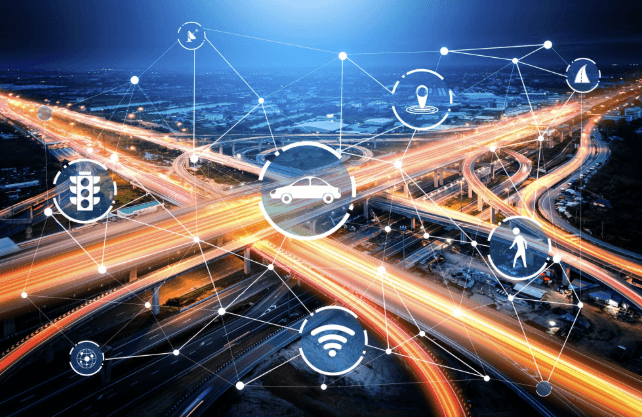
Intelligent Transportation Systems coordinate sensing, communication, and analytics to improve safety and mobility. Core layers—data acquisition, networks, and decision platforms—rely on interoperable models and robust governance for privacy and quality. Real-world deployments show gains in multimodal efficiency, freight routing, and corridor synchronization within auditable ecosystems. The domain faces standards, policy, and deployment challenges that shape performance outcomes. Stakeholders will find value in structured evidence as they consider scale and integration across networks.
What Are Intelligent Transportation Systems (ITS)?
Intelligent Transportation Systems (ITS) are integrated advanced technologies applied to transportation infrastructure, vehicles, and user interfaces to improve safety, efficiency, and mobility. The framework analyzes signals, sensors, and communications to optimize flow and decision-making. ITS supports autonomous traffic by coordinating routes and signals, while formal data governance ensures integrity, privacy, and compliance, enabling scalable, transparent, and auditable operations within modern mobility ecosystems.
Core Components Powering ITS Ecosystems
The ITS landscape rests on a triad of interoperable layers: sensing and data acquisition, communication networks, and processing and decision-making platforms. Core components include standardized interfaces, interoperable data models, and robust analytics engines, enabling real-time collaboration and automation. Data governance structures ensure data lineage, quality, and stewardship, while privacy considerations govern access controls, anonymization, and protection of sensitive information across ecosystems.
Real-World Applications That Cut Congestion and Emissions
Real-world deployments of Intelligent Transportation Systems demonstrate measurable reductions in congestion and emissions through integrated strategies such as adaptive signal control, real-time traffic management, and coordinated multimodal routing.
Empirical results quantify traffic flow improvements, reduced idling, and streamlined freight movements via addressing last mile delivery, urban truck routing, traffic signal optimization, dynamic tolling, autonomous transit pilots, EV charging integration, and synchronized corridor operations.
Challenges, Standards, and Policy Pathways for Deployment
Policy pathways for deploying Intelligent Transportation Systems must address a spectrum of challenges, standards, and governance mechanisms to ensure scalable, interoperable, and secure implementations.
The discussion centers on interoperable data architectures, governance, and risk management, emphasizing data privacy and urban ethics.
Technical requirements, certification, and compliance frameworks enable transparent, consistent deployment while preserving user autonomy and democratic accountability in complex mobility ecosystems.
Frequently Asked Questions
How Do ITS Affect Privacy and Data Security for Travelers?
Privacy concerns arise from surveillance and profiling, while data governance establishes access controls, retention policies, and accountability mechanisms; travelers benefit from transparency and safeguards, yet freedom depends on robust encryption, minimization, and verifiable compliance in standardized, data-driven processes.
What Funding Models Sustain Long-Term ITS Deployments?
Funding models for long term deployments rely on public-private partnerships, user fees, and annuity funding, balancing accessibility with privacy and data security. Performance metrics, cybersecurity risks, and congestion reduction outcomes guide ongoing investments and adaptability for scalable deployment.
Can ITS Ensure Accessibility for All Road Users and Communities?
Accessibility is achievable through structured accessibility assessment and ongoing community engagement, though variances exist; data-driven benchmarks and standardized metrics guide deployment, ensuring inclusive design while preserving user autonomy across diverse road-user groups.
How Do ITS Technologies Handle Cybersecurity Risks in Networks?
Cybersecurity risks in networks are mitigated through cybersecurity governance and threat modeling, with privacy preserving analytics and data minimization guiding data handling; standards-based, data-driven controls balance security requirements and user autonomy for resilient transport systems.
See also: InsurTech Innovations Explained
What Metrics Best Measure ITS Performance Beyond Congestion Reduction?
The metrics include data quality and system resilience, alongside reliability, uptime, security incident rates, and interoperability scores; they should be standardized, transparent, and actionable, enabling autonomous decision-making, continuous improvement, and policy-informed freedom in networked transportation performance assessments.
Conclusion
Intelligent Transportation Systems stand as the pinnacle of data-driven mobility optimization, delivering measurable gains that outstrip traditional approaches by orders of magnitude. Across sensing, networking, and decision platforms, quantified benefits—reduced delay, lower emissions, and higher multimodal throughput—are repeatedly documented in controlled and real-world deployments. While standards and governance remain essential, the aggregate impact is a striking exponent of efficiency, reliability, and scalability, implying an inexorably accelerating trajectory toward fully synchronized, auditable transportation ecosystems.